
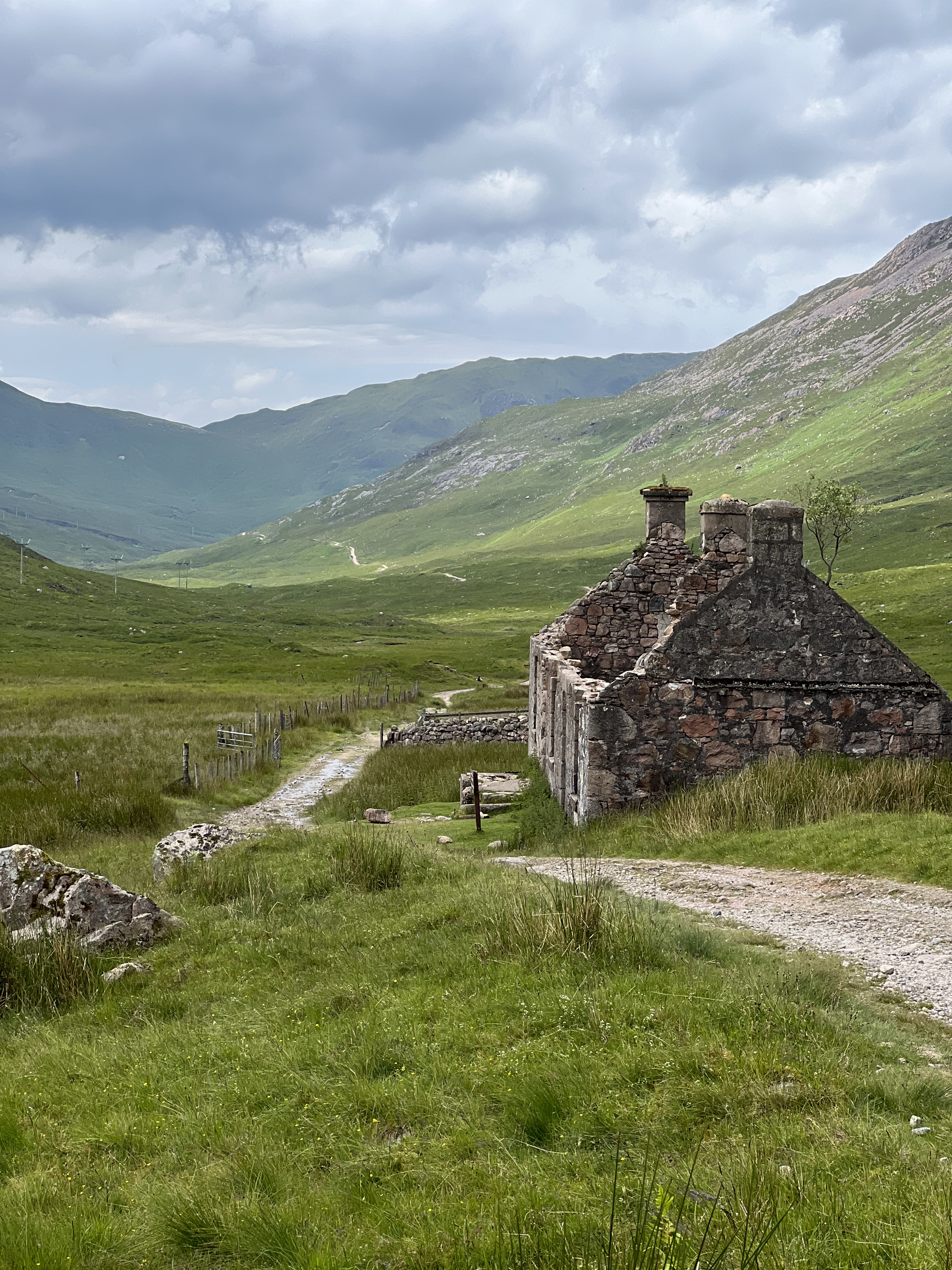
The West Highland Way (the ‘Way’) is Scotland’s first, officially designated long-distant route tracing 96.5 miles from Milgavie to Fort William. Most hikers take 6-9 days to complete the walk that meanders through lowland farms, villages, and along the shores of breathtaking lakes and rivers in the well-stewarded Scottish highlands. It has been a long-held desire of mine to experience Scotland, and my hike on the West Highland Way (July 2022) exceeded my expectations! When planning my 9-day solo trip on the ‘Way’, I had two goals: To meet the physical and mental challenge of this famous long-distant hike, and to get a glimpse of how Scotland leads the outdoor sector in creating accessible spaces.
The West Highland Way is one of many trails in Scotland’s great national trail system, and remains as the most popular since its opening in 1980. As a Canadian, planning a trip abroad requires a great deal of research and logistical arrangement, in addition to selecting the proper equipment and supplies needed for a safe ‘wild camping’ experience of this kind. In this blog, I share some of my observations as to why I think Scotland is a global leader in the outdoor adventure sector.


Scotland values outdoor adventure and natural spaces. Private land owners, municipalities, nonprofit organizations, public trusts, and countless trail management volunteers are working together to provide responsible trail access and steward the protection of the West Highland Way. This impressive collaboration demonstrates the values Scotland holds for outdoor adventure, while sustaining the health of natural spaces for generations to come. The Scottish Outdoor Access Code, promoted widely to all hikers, aims to uphold these values and the responsible use of the national trail system. Throughout my hike I observed Scottish citizens and global visitors alike maintain the integrity of the trail through active no-trace camping practices and low-impact behaviours.
Trusted sources of information. The Scottish government, NatureScot, and the many partners have created excellent online resources to ease the planning, linking visitors to a network of nonprofit and for-profit businesses to teach about the trail, how to plan the adventure, and set the expectations for its use. Complimenting the national information platforms are an offshoot of social media platforms that hikers can easily access the experienced long-distance hiker community and ‘Way wannabees’ to exchange advice and resources. The national strategy of making Scotland’s outdoor spaces accessible to all is well supported by its communication and information operations – from the grassroots community level to the national tourism management bodies.
More than ever, it is important to find digestible and reliable information that will help build a safe, educated, and memorable user experience. Every step throughout the planning process to the eventual walking to the final destination of Fort William, information is readily available through the network of nonprofits, community groups, local citizens and hikers of all stripes. I found the readiness to support the experience is baked into Scottish hospitality.


The West Highland Way truly connects hikers to local history and culture. Having previously hiked the interior of the Cape Breton Highlands, I have been natural curious about the Scottish Highlands and connecting with the history and culture of Scotland. The West Highland Way felt like a walk through time. Communities and natural spaces are well preserved, giving any hiker a feeling and appreciation of the deep Scottish natural history and culture. The Way is dotted with interruptive signs educating hikers about native plants, notable historical events, and trail stewardship initiatives; while the centuries old homestead ruins evoke the hardships, lifestyles and spirts of the Scottish Clans.
Make the West Highland journey your own. Most long-distance hikers prefer to begin their journey at the official trail head in Milgavie, however access is made easy with public transit to towns and villages along the route if visitors want to shorten or portion-out their adventure. Hikers can chose to set their own pace, wild camp almost anywhere or book into hotel/lodges. Opting to carry a full backpack or use the bag transfer services, hiking the highlands is even more accessible to those of various physical strength. By design, the West Highland Way allows you to plan your hike to fit your interests, physical ability, and schedule. Step by step, the Highlands provide the opportunities to learn about the rich history, vibrant community, natural world, and oneself.
Personally, I found myself off my pre-planned daily schedule to take pictures, read interpretive signs, talk with hikers and locals, and savour the majestic and rugged beauty of this remarkable place. Perhaps one day I will return to retrace my steps, and deepen my love and appreciation for the West Highland Way.


Canadian Outdoor Sector organizations and related businesses interested in collaborating to build a strong, sustainable sector are encouraged to reach out to KDP Consulting Inc. and/or email Keith@kdpconsulting.ca
We work with you to provide a tailored response to the challenges you face and the solutions you seek. It’s our commitment to your business. KDP Outdoors is a division of KDP Consulting Inc., a proven consultancy serving organizations across Canada.